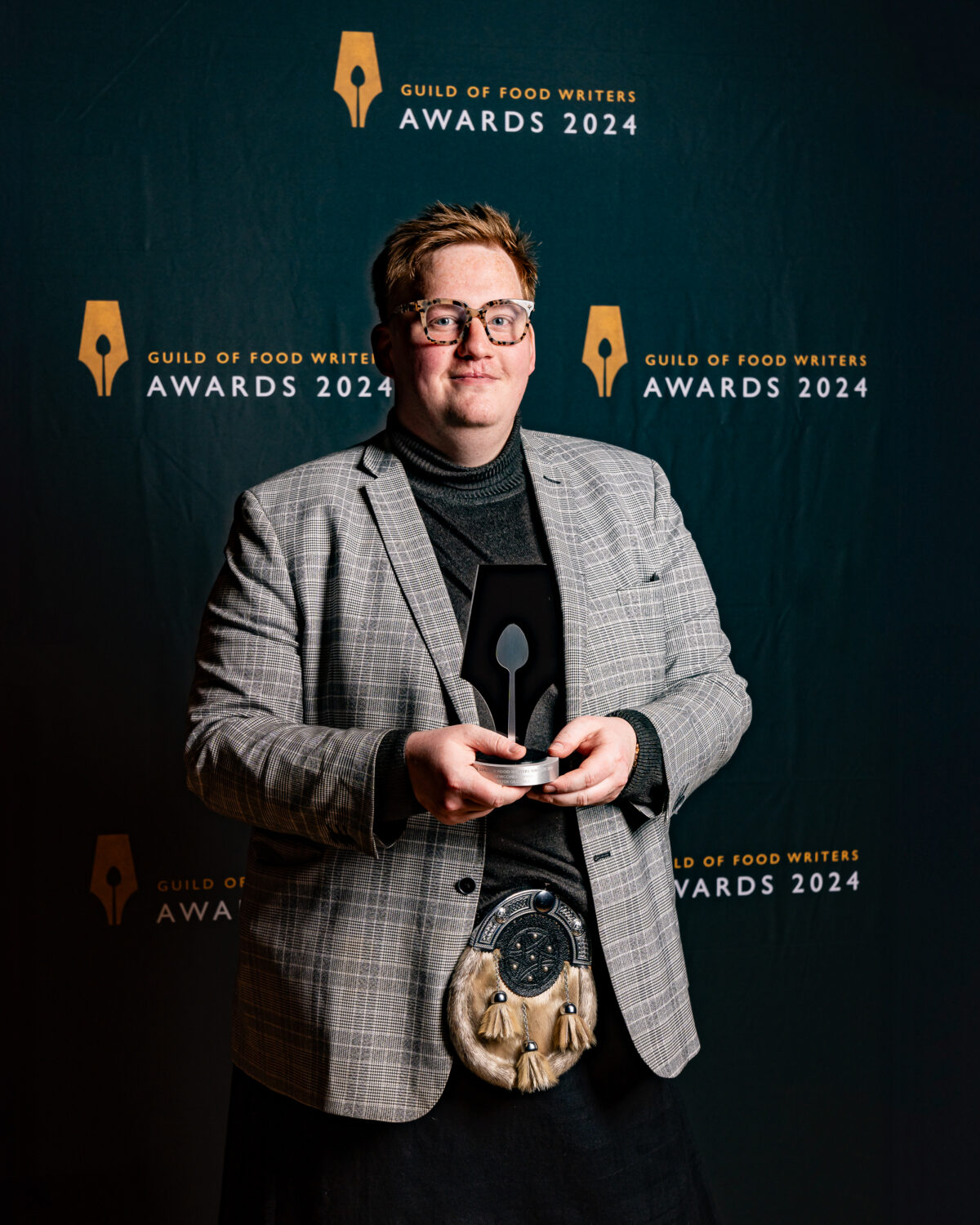
Why do Scots celebrate haggis and whisky but overlook the food they eat every day? Scottish food historian Peter Gilchrist believes reclaiming ordinary foods such as morning rolls and tattie scones could help Scotland reconnect with its culture, history and identity.
There is something wonderfully mundane about ordering a morning roll.
It happens across Scotland every day without a second thought. Yet Scottish food historian Peter Gilchrist believes that simple act represents more than 500 years of living culture. He is campaigning to have the tradition recognised by UNESCO as part of its Living Heritage programme, arguing that it deserves to stand alongside ceilidh dancing, tartan and whisky as an expression of Scottish identity.

When news of the campaign broke, the reaction was mixed. Many welcomed it as a celebration of an everyday Scottish staple. Others dismissed it as absurd.
It sounds faintly ridiculous at first. A morning roll? Really?
But spend five minutes talking to Gilchrist and it quickly becomes clear this is no publicity stunt. For him, the morning roll is simply a way into a much bigger question: why does Scotland struggle to value its own food?
Why doesn’t Scotland value its food?
Gilchrist believes the answer lies in Scotland’s history.
“When you have cyclical poverty, like we’ve had in this country, where every 80 years, 20% of the population can’t afford food, then our food culture can take a back seat,” he says.
That legacy of poverty, he argues, was compounded by rapid industrialisation and the Highland Clearances, which severed communities from local food traditions.

“We didn’t collect the lives of ordinary working people,” he says. “We have statistics about how many oats they bought or how many cattle they owned, but we didn’t collect their recipes.”
Scottish food writer Wendy Barrie adds that the importation of American goods into the country in the 1950s and 60s also helped contribute to a loss of good quality food.
“That homegenisation of food coming from America played a huge role in the devaluing of our heritage food products.”
The result is a country that knows surprisingly little about its own culinary heritage.
Selling a myth
Ask someone outside Scotland to name Scottish foods and the answers rarely change.
Haggis. Whisky. Deep-fried Mars bars.
“These are things which aren’t on my plate every day,” Gilchrist says.
He believes Scotland has become trapped selling a romanticised version of itself instead of celebrating the food people actually eat.
“If you look at almost any cookery book from the last 50 years with ‘Scottish’ in the title, it’ll have a tartan tablecloth, a pewter plate and haggis on the cover.”
“We’re still selling history. And not even real history, we’re selling stories that we were taught.”
Meanwhile, the foods that define everyday Scottish life are overlooked.

Morning rolls are just one example. Scotland has produced world-class cheeses for centuries, while its cool, wet climate creates exceptional oats, butter and dairy products.
“We don’t need to create anything new,” says Gilchrist. “You just need people to wake up to it.”
Food as identity
His own fascination with Scottish food began after the death of his grandmother.
Growing up in Paisley during the 1990s, he says he associated the town with poverty, heroin and knife crime.
“I didn’t think there was anything special about being from Paisley. I didn’t think we had a food culture.”
Sorting through family recipe books after his grandmother died, he noticed something remarkable. Both of his grandmothers, despite growing up at opposite ends of Scotland, had copied down the exact same recipes.
Curious about where they had come from, he started researching Scottish food history.
He discovered an old shortbread recipe that matched his grandmother’s almost exactly. The only difference was that it called for “Paisley flour” instead of cornflour.
“I thought, ‘What on earth is Paisley flour?'”
He discovered that cornflour had been invented in Paisley in 1840, with local manufacturers distributing recipe books and baking moulds to promote the product.
“Within a month of looking into food history, it had entirely changed not only my own perspective on the stories I’d gathered from my family about the importance of food, but it also began to rewrite the story I’d told myself about where I was from, what Paisley was like, and what Paisley’s history was.”
That discovery transformed the way he viewed both his hometown and Scotland itself.
“Every town will have its Paisley flour story,” he says. “That’s a foundation to begin rebuilding what is hopefully a better sense of self, a prouder sense of self, and a sense of self that relates to what is actually on your plate, not what you’ve been told your food is.”
“Food is a really important aspect of culture. It tells us who we are, it tells us where we’re from. It can provide a sense of home, it can unnerve us, it can take us back to our childhood.”
Where Scotland goes next
Gilchrist points to France as an example of what Scotland could become.
There, bread, butter and cheese are celebrated not simply as food but as expressions of national identity. He believes government programmes introduced during the 1980s, encouraging children to value regional produce over fast food, helped shape that culture.
“It had a seismic impact on the way those children grew up to think about French food, and that influenced their families too.”
“The way France now talks about, handles and represents its food is, in part, a result of those programmes.”
He believes other countries have successfully built healthy food identities by celebrating the ordinary rather than the exceptional.
His morning roll campaign, he says, is only the beginning.
“If you have an authority (like UNESCO) that recognises value in culture, an authority that anoints part of our food culture, like the morning roll, we can begin to have a serious conversation as a country about what else we’re not celebrating.”


