Spending more time on Instagram than attending university lectures… Sounds like something the older generation would blame Gen-Z for. The lazy generation, they’d say. Too busy scrolling and watching cat videos and making stupid TikToks rather than actual learning.
But really, with the lack of class times seen across universities in Scotland, this really isn’t the fault of Gen-Z. They did not dictate the lack of class time. It was the universities who thought that just a handful of hours a week was sufficient for the hefty fees that international students pay. Seen at various university campuses across not just Scotland but Europe, too, the lack of class time certainly is a problem for many young people.
Glasgow University students feel they don’t have enough time in class
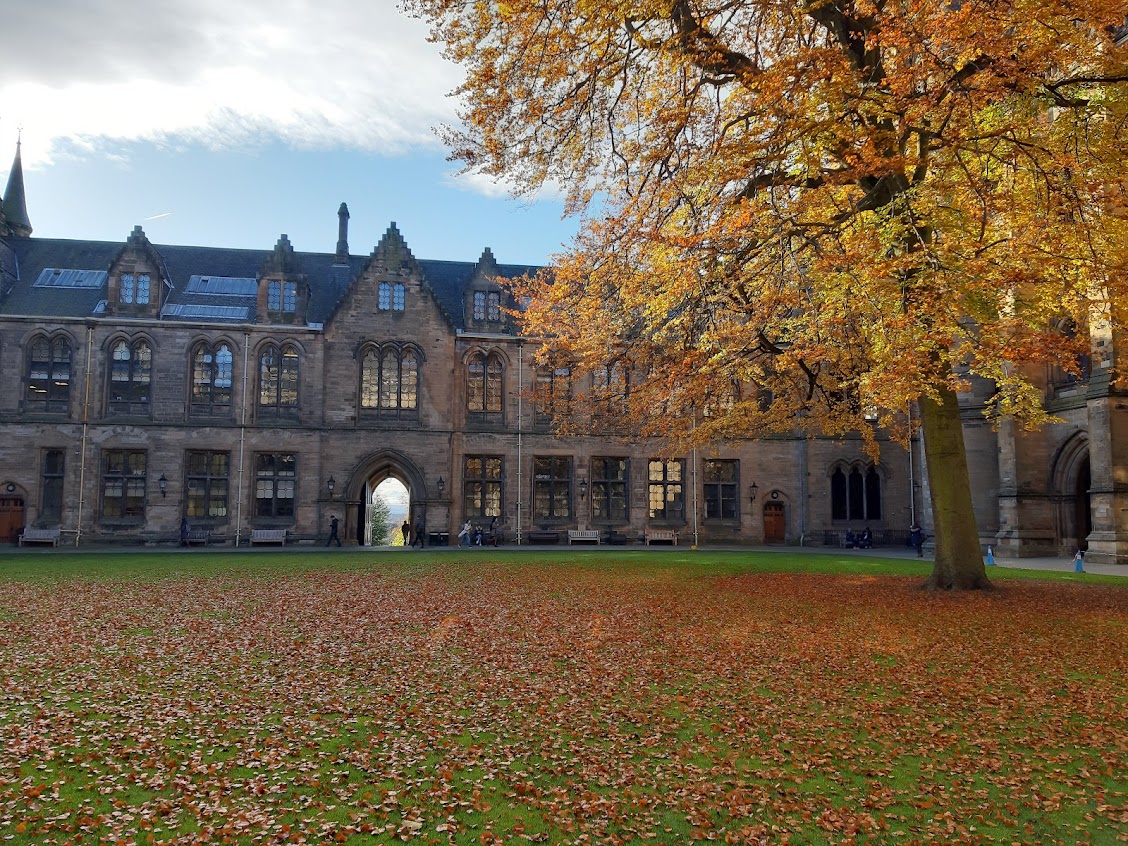
The prestigious Glasgow University, one of Scotland’s four ancient universities, certainly suffers from a lack of class time.
Both Sean Bradley and Archie Millett are studying history at the university.
27-year-old Sean is from Glasgow, having gained a place at Glasgow through the Access Course. He explained how few classes he had this semester.
“I had three hours of class time this semester and four hours class time in semester one. Personally, I don’t think that’s long enough.”
The lack of class time was something he hadn’t been made aware of before starting university. He did find some positives in this, namely the added free time.
Yet he felt that “the balance was slightly off, especially when it came to writing the dissertation.”
He further expanded on his frustration at the dissertation support provided.
“I do think my dissertation grade would’ve been better had there been more contact hours with lecturers and tutors. I can’t complain about my overall grade but again I do think extra teaching hours with the special subject would’ve helped. Three hours a week just isn’t enough.”

Archie, an English student paying £9,250 a year, agreed that the class time was not enough.
“Three hours does not justify the money we pay each year.”
He explained that he spent more time working at home and that it felt like an independent learning course.
While he had thoroughly enjoyed his Lenin class, he wished that there was more of it.
From speaking to various history students at the university, it appears the average amount of class time is between three and four hours a week. There are eleven weeks per semester, equalling twenty-two weeks overall. Two of these weeks have no classes due to reading week. This means there are twenty weeks of teaching a year, equalling eighty hours of class an academic year. For an English student paying £9,250 and having four hours a week, each hour costs approximately £115.63. The graph below illustrates what could be bought with the money spent per hour instead.

St Andrews students also wish they saw more time in lectures
Yet the lack of class time is not just seen at Glasgow. Other top universities in Scotland are also in a similar circumstance. St Andrews, often topping league tables and famous for its royal alumni, also lacks in class time. (No wonder William and Kate’s romance blossomed here if they had so much free time!)
Several St Andrews students voiced their complaints at the lack of class time.
One student, a young adult from East Asia, who wished to remain anonymous, explained their annoyance at the system. They are studying International Relations and Modern History for £25,100 a year.
“St Andrews justifies the low amount of contact hours by claiming that they’re fostering ‘independent’ and ‘student-led learning’, but there’s a difference between doing independent study between classes and doing 95% of the learning on your own and supplementing the remaining 5% by a supremely unfulfilling lecture or tutorial. It gets to a point where you wonder if you’re being ripped off by the university.”
The student explained that they had heard that other students studying science subjects had more class time. They also knew of friends at other universities across the UK who had more class time than they did.
They suggested improvements that could be made.
“In my opinion, I think universities can increase the number of classes that each student has to take or increase the number of lectures and/or tutorials for each module. 15-20 hours of class time for a humanities student is reasonable, but 4-6 hours of contact per week is honestly a joke.”

Another St Andrews student, Amy Lam, spoke to The Clyde Insider on her experience. She is eighteen, having moved to the Fife town from South London. She also felt disappointed by the lack of class time. Studying English Literature and Mathematics, she only had fourteen hours of class a week. She pays £9,250 a year for her course.
“I much prefer class time to independent study, so I personally don’t think it’s enough – it feels like we’re trusted to make huge improvements by ourselves in between tutorials, and for most 18-year-olds this just isn’t realistic.”
She felt that the lack of in-person teaching caused her to waste time.
“It’s brilliant if you’re driven enough to study by yourself for hours a day, but again, this simply isn’t realistic as most students have just been doing six hours a day at school. Without any real homework or compulsory class hours, academics begin to fade into the background, and become very low maintenance. I often forget I’m here to study!”
A languages student, Emma, also felt that she wasn’t making good use of her time. She only had fourteen hours of in-person class a week.
“I struggle with procrastination a lot so I definitely do waste a lot of time with this schedule. After getting home from classes at 1:30 I often did nothing productive whatsoever for the rest of the day.”
She suggested what she thought was an ideal amount of class time.
“I think the ideal class time would be perhaps a little more, maybe eighteen hours or so per subject.”
Heriot-Watt finds it faces a similar situation
Heriot-Watt, recently ranked the third best Scottish university in the Complete University Guide rankings, also has a lack of class time.
One Computer Science student, Mark Smith, a forty-year-old from London, explained how he had even calculated how much class time they got.
“It averages five minutes weekly per 20 credit module. The rest is from reading books and self-activities. I have actually measured this to file a complaint.”
He expressed frustration at the price of his £9,2500 a year course.
“It’s a rip off… Students aren’t getting back their tuitions worth.”
A 28-year-old Indian student at the Engineering school also felt they were lacking in class time. In the second semester, they only had two lectures a week. Meanwhile they were paying £17,000 a year in fees.
They also felt they were wasting time.
“I felt I had a very flexible schedule around this, and I would indeed like to have more hours and interactions around the subject matter and its relevance to industry as it stands currently.”
They gave suggestions for the class time they believed they should have.
“I would say five hours of lectures a week and two hours of lab would be most ideal.”

With English students and international students paying such hefty tuition, it’s no wonder students are upset. St Andrews currently lists their international fees for most subjects in the next academic year as £31,670 – a crazy sum for a few hours of class a week.
Interestingly, the Complete University Guide was released recently, showing that student satisfaction still remained quite high among the three universities, as shown in the graph above. Yet these rankings do not show the full picture: it would perhaps be good if next time the rankings considered class times at various institutions.
A spokesperson for Heriot-Watt University said: “We take all student feedback seriously and strongly encourage anyone with concerns to raise them through the appropriate official channels, where they will be given full consideration.”
Meanwhile, a spokesperson for the University of St Andrews stated: “The University of St Andrews is consistently ranked among the top universities in the UK for teaching quality and student experience, most recently in the Complete University Guide 2026.”
The University of Glasgow failed to respond.


