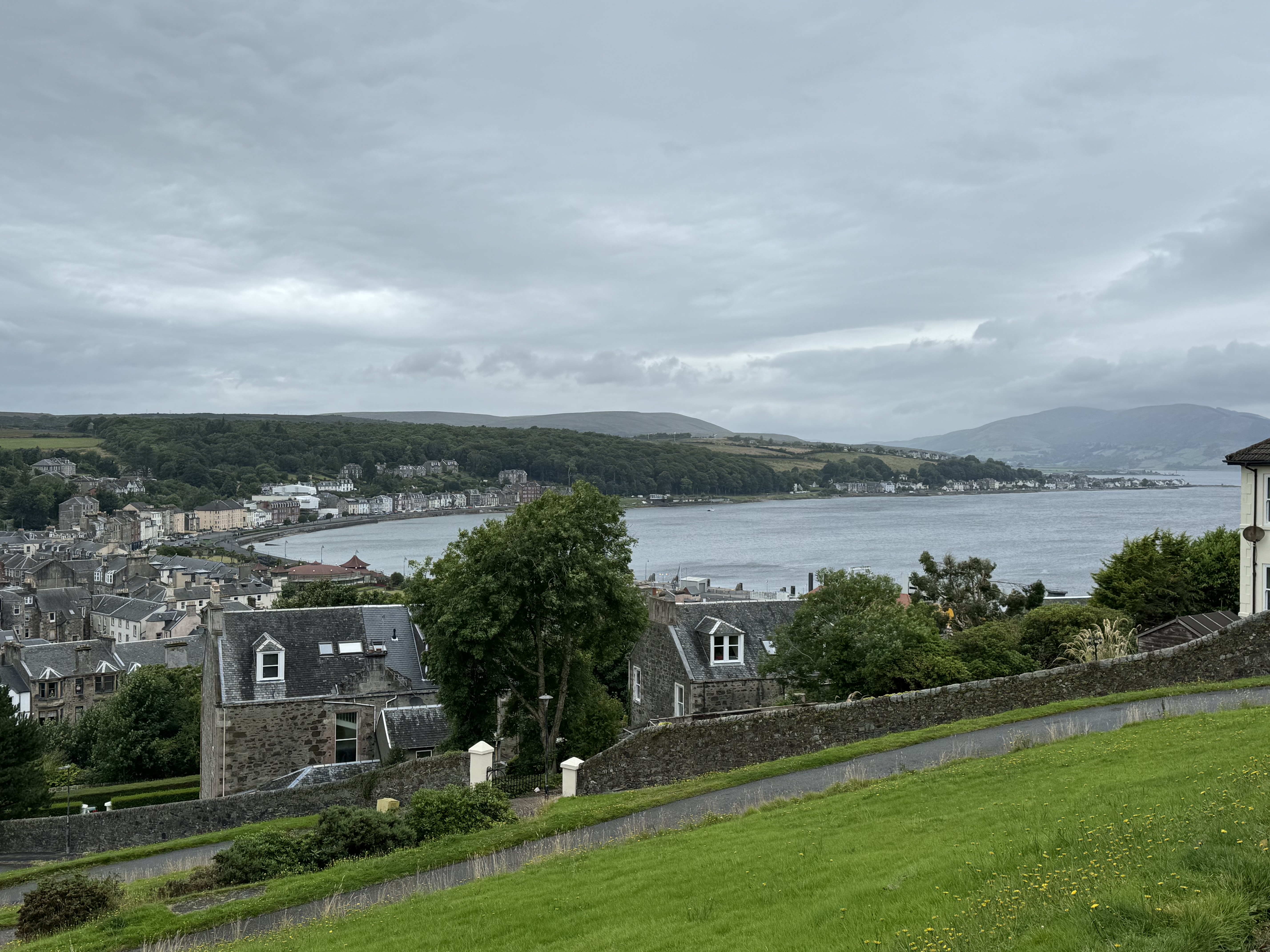
The ocean and its habitat are vulnerable to waste that the fishing and aquaculture industries disperse in our oceans. Megan Hamill, a 23-year-old volunteer from the Young Sea Changers Scotland explains that the organisation’s aims are giving younger people a voice in marine issues and policy.
She grew up on the Island of Arran. On the island “nature is sort of all around you, you can’t escape it” says Megan. When she moved to study at the University of Dundee, she realised that she took being close to nature “for granted”. Megan took part in voluntary work with the Arran Eco-Savvy, where she aided the community for 11 months in reducing waste and packaging. She also participated in a community project organised by a nearby café that brought together a number of locals to provide local produce.

What is Turning the Tide?
Alan Munro and Sophie Plant, founders of Turning the Tide programme made by Young Sea Changers Scotland, advocate for younger people to get involved with our oceans. Megan agrees with the founder’s approach, because “essentially it’s our future, the state of the environment is what we are going to inherit”. Turning the Tide is a 5-month online project for those aged 16-25. The programme includes various guest speakers and online modules produced by the YSCS team. Everyone is paired up with a YSCS mentor, that helps them find their own interests in the marine space, developing their voice as well as “match them with opportunities in the sector”. Sophie Plant, a project coordinator for the programme, says that the programme is proving to be successful, when its first group rated “their knowledge of how they might personally influence marine policy” a 2 out of 5 before the programme, however this changed tremendously to a 5 out of 5 after their completion of the course. The next step for Turning the Tide is to engage with the youth in Highland & Islands, because they are affected by marine issues more than we are in the mainland.

Marine Protected Areas and Maerl Seabed
In Megan’s opinion, marine protected areas should be a priority. Protection of certain areas can reduce the overall impact of the most destructive ways of fishing, which is bottom trawling and dredging. This way of fishing alone can “destroy roughly 70% of a living seabed habitat in a single tow”. This severely damages the seabed and “all the carbon is just locked there” as a result. Biogenic reefs and flame shells have the “highest carbon absorption” out of all other marine habitats. In Arran, Megan points to an important aspect of marine life that the island has preserved for years. They are called “maerl beds”. According to Arran Coast “[maerl beds] can support a variety of algae and invertebrates and even act as nursery habitats for commercial species such as cod, scallops and pollock”. It is a type of a coral that grows very slowly. At the speed of “less than 1 centimetre a year”. The issue with bottom trawling and dredging, Megan explains, is that maerl beds progress can be wasted with “hundreds of years’” worth of growth gone as a result of destructive fishing.
South Arran’s marine protected areas were established in 2014, the protected areas cover 280 sq.km – or 108 sq. miles – around Arran. Marine Scotland Compliance are in charge to enforce the legislation as well as using a vessel monitoring system. Kipper guide is one of the methods that the Arran Coast developed to monitor suspicious fishing in the protected areas. MPA regulations state that if an individual does not comply with their mandatory requirements, they can be fined up to £50,000 or a possible prosecution.

Isle of Arran’s No Take Zone
Isle of Arran has the only “no take zone” in Scotland. The no take zone is a severely protected marine area which was set up by a marine community charity, Arran Coast. It is strictly prohibited to fish there or take anything out of that area. Arran Seabed Trust was started by two scuba divers Howard Wood and Don MacNeish. In 1980s, New Zealand was perfecting their no take zones, where any type of fishing was banned. New Zealand inspired Wood and MacNeish to look more into “community established marine reserves”. Marine Conservation Society is a marine organisation that collects data yearly on waste that is found on the mainland compared to islands. The organisation has found that on islands, there are higher levels of litter, noting that “64% of litter recorded from the island was from fishing and aquaculture industries”. Marine Conservation Society’s research suggests that the West of Scotland has “has the highest rate of entanglement affecting marine mammals” which contributes to the issue. Among the most common mammals in Arran are red squirrels, which can be spotted in the forests such as the Brodick Castle Woods. Seals are commonly seen during low tides surrounding Arran’s Lochranza, which is known as the Loch of the Seals. Basking sharks have seen the most shocking decline from 50%-90%. In the 1990s they were often caught for their oil-rich livers in the First of Clyde. Subsequently, due to their slow reproduction, these factors ultimately led to a small population of basking sharks in the Scottish seas.
Jenny Crockett, an outreach and communications manager of the Arran Coast says that without the set-up of the no take zone “change would never have occurred”. A survey recently conducted showed that “three-fold increase in king scallop density within the NTZ, and a more than eight-fold increase in king scallop density within the wider MPA since 2016”.

The Clyde’s chemical assessment and preservation of our seas
A marine assessment from 2020 showed that the “Clyde is one of most degraded marine environments in Scotland”. The Clyde has failed a safe chemical status due to high “contamination from chromium VI” which can be dangerous to human health. Megan said that the data are shocking, because it lets us know what happens “when fishing goes unchecked”. The video below explains how the Glasgow City Council are aiming to change the state of the river Clyde by 2050.
Source of the council document: Glasgow city council’s development corridor strategic development framework
Megan states that “sometimes you can surprise yourself with what you know even just the experience of where you grow up in Scotland, you can really add a lot to the conversation even if you don’t live by the sea”. Only 37% of Scotland’s marine areas are protected, which is a “never-ending battle” says Jenny, with many MPAs still becoming damaged and polluted. Megan often feels discouraged when she does beach cleans. The next day the beach is polluted again with rubbish and plastics. As big as the issue of marine conservation is, by just picking up a piece of rubbish you are contributing to a better tomorrow.


One Comment
A very informative article and a great project! We need more youth involved in protecting our shared Ocean. I’m grateful for all those involved in Turning the Tide!