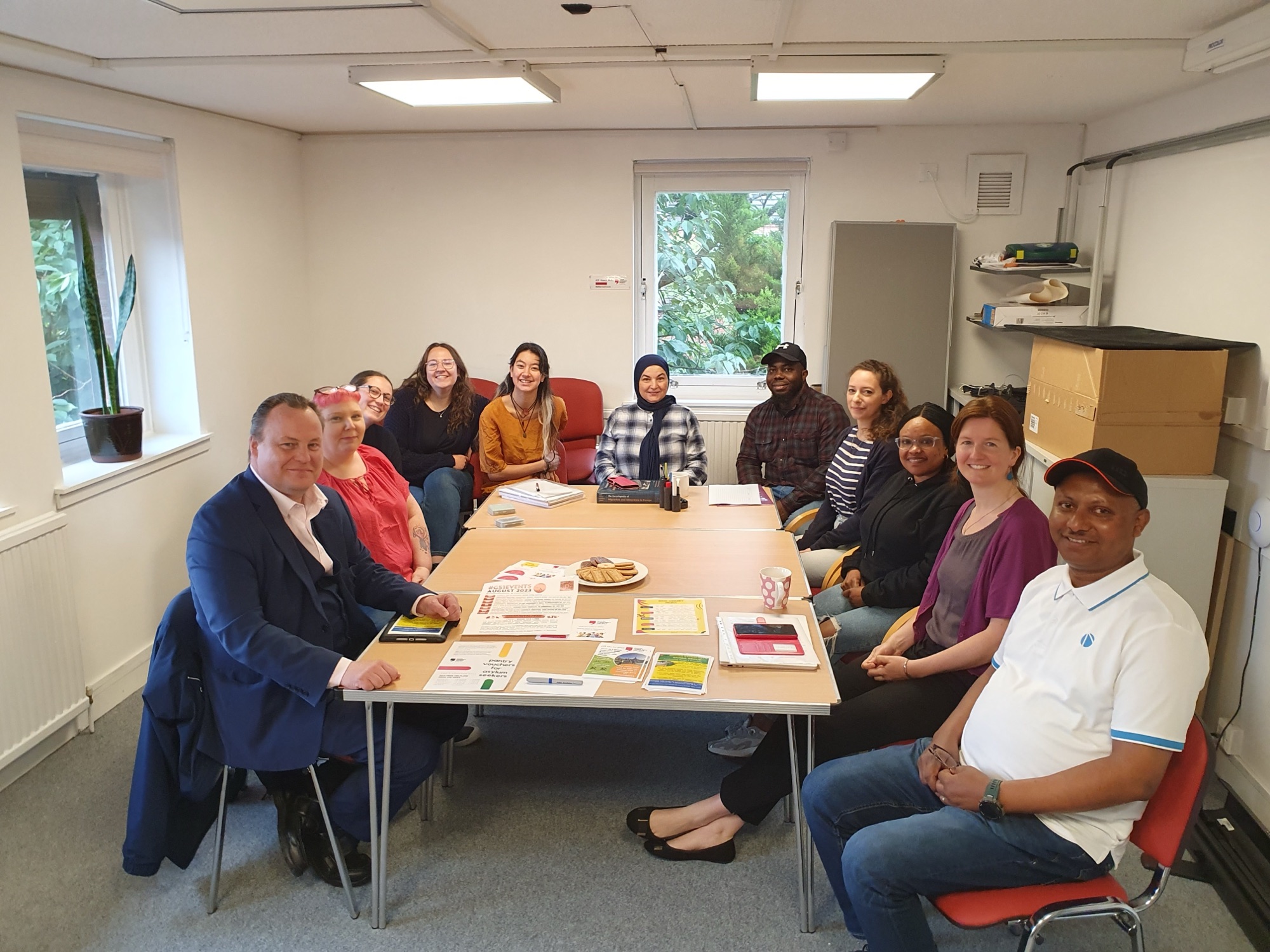
Picture – The Govan Community Project
Catriona Harrison in conversation with Traci Kirkland from The Govan Community Project, and Juliana de Penha from Migrant Women Press.
“People don’t jump in a boat if there’s another choice. People don’t put their children in precarious positions unless the sea is safer than the land”.
These are the words of Traci Kirkland from The Govan Community Project, a community-based organisation that supports over 1,000 refugees and people seeking asylum a year.
Their goal is to achieve “social justice in the Greater Govan area by building a strong community based on equality, mutual respect, support, and integration”. They do this through hosting homework groups, woman’s clubs and through helping people get food on the table.
Not only does the Govan Community Project help newcomers to Glasgow on the ground, they also campaign and lobby the government to make necessary systematic changes. Traci states, “we work in collaboration with other partners across the sector, so we all really support each other”. Arguably, one of the biggest systematic changes that needs to happen is to give people in the asylum system the ‘right to work’.
“People tell us time and time again they don’t want to be relying on the local councils.” She affirms, “They don’t want to be relying on the charities. They want to be able to rely on themselves and have the choice that comes with that.”
Also, increasing the ‘move on period’ would see the government extend the number of days people are allowed to stay after being granted leave to remain, from 28 days to 58. “That would make a huge change for people”, says Traci.
The Govan Community Project works together as part of a UK coalition group called Together with Refugees to lobby for change, “we have a group of people with lived experience” Traci continues, “who are doing pieces of work with the Scottish Government around raising awareness on the additional challenges of food security”.
‘Illegals’, ‘end the invasion’, ‘stop the boats’. All phrases that have been increasingly used to discuss migrants and people seeking asylum. These words have been consumed en masse, making it hard for people like Traci to carry out the great work they do. “I think that only people who are working directly with our community are seeing the truth and busting all those myths. But it’s harmful… they’re going with what they see in the papers, what they’re seeing on social media, what they see on the news, what they hear in Westminster, what politicians say”.
Research group Hope not Hate, which focuses on the organised far-right, remarked on an increase in support for “hostile immigration policy increased by 9%, with 73% in the post-Southport data set being in favour of ignoring or withdrawing from international laws or conventions so that the UK has more control of its borders.”
The Guardian links other parts of this research to the aggressive narratives fuelled by past senior members of the Conservative Government. Suella Braverman for one, arguing that her “inflammatory anti-migrant language” often invigorated and was parroted by the far right, especially some of its most “notorious figures”.
Upon the election of the Labour Government, Keir Starmer remarked the Rwanda bill is “dead and buried”, which Traci stated was a positive, however, she still wishes to see the ‘illegal migration act’ scrapped.
When asking Traci how she and her colleagues remain positive in the wake of aggressive anti-immigration narratives, she remarks, “I think it is becoming really concerning, the narratives and the language that’s used… It’s really scary. It’s so scary. You know it makes people wonder if it’s safe to go out.”
“We support people in their connections and their new communities but how do people do that if they don’t feel safe?
We try to see the positive and the strength of the people who are going through this system every day… So, seeing the feedback from the people we’re working with just keeps you going a little bit.”
Recently, The Govan Community Project carried out a survey and discovered that 81% of people who have used their services found them to be helpful.
“You helped us get access to food when we had none.” Declared one service user.
Migrant Women’s Press, founded by Juliana de Penha, seeks to bring migrant woman together by “amplifying voices through journalism”. Although the publication is registered here in Scotland, they aim to hear and showcase women’s voices from around the world. They are international in that sense, not bound by physical restraints of borders, “Migrant Women Press is not local news, it is more community”.
Migrant Women Press aims to shine a light on the positive stories migrant woman share in the face of growing far right hate. Juliana argues that it is ‘frustrating’ to not see these stories on mainstream media and that their mission “with journalism is to provide positive stories.” However, with this, they aim to maintain sensitivity and ensure stories are organic.
Stories from migrant woman remain marginalised as often migration is depicted as “male dominated, with women and girls considered as “tied movers”, as found in a World Migration Report, from the International Organization for Migration. However, a study on the ‘feminisation of migration’ noted the increasing presence of women migrating independently. In 2020, 51.9% of people migrating were men, compared to 48.1% of women. These patterns and trends remain highly nuanced as the gap between women and males increases.
Juliana often showcases first time writers on the Migrant Women Press, allowing authentic voices and stories to be heard whilst helping to combat the growing narratives online. These articles depicting first hand experiences are all small rebellions in their own right. Juliana states that toxic narratives spread online “definitely do impact us, but our mission is clear”. And that unwavering mission is to “provide a sustainable media platform and publish original journalism content produced exclusively by migrant women…” In addition, Migrant Women Press also offer training and opportunities in the media.
Juliana hopes that by creating a space where women can share “inspiring and humanistic stories, it will help people to become more empathetic to the migrant experience” and that it will encourage people “to reflect”. She argues that this is a difficult “balancing act between sharing uplifting stories and discussions of challenges”.
Juliana is proud that she can continue her publication which is ‘small, yet sustainable’, carrying out work that helps to bring voices to those often left unheard. Likewise, Traci is proud that there will always be a person on the end of the phone to help someone who is seeking asylum.
The Govan Community Project and Migrant Women Press are both battling the same issues from different corners. Often interlinked, they still hope to spread the message of hope, positivity, and that systemic changes need to be made, as well an end the harmful narratives that continue to be spread.


