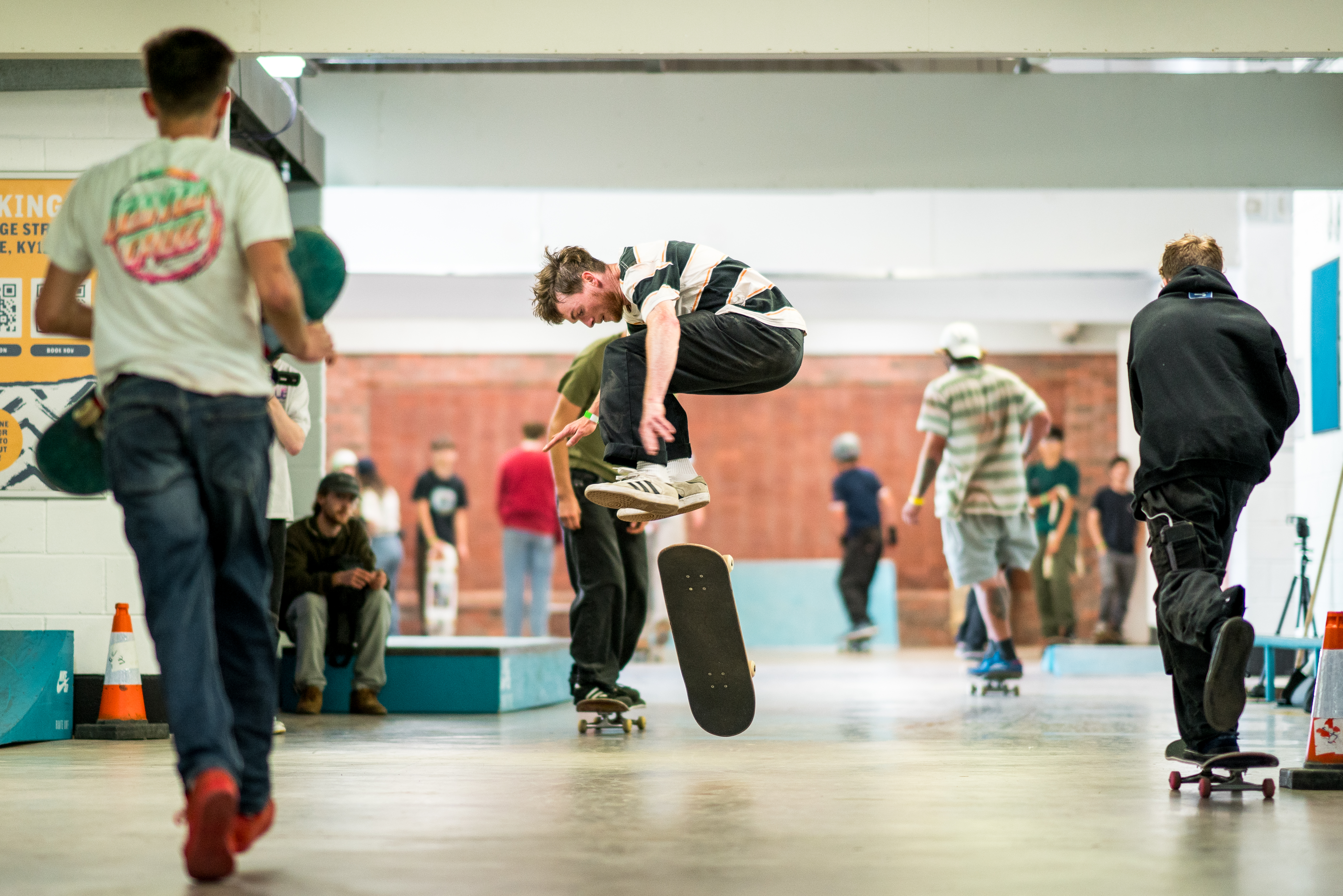
You probably already have an opinion on skate coaching. In fact, the lack of formal training is part of the reason a lot of people become obsessed with skating in the first place.
In years gone by, the skatepark was a welcome refuge from the pressures of organised sports. Skaters progressed at their own pace through trial and error, and had a good time doing it.
But times are changing. Skateboarding is an Olympic sport now and seven-year-old kids are landing 900’s. Skate-coaching is widely available, and parents seem to be more involved than before.
It begs the question: If coaching was available to past generations, how many current skaters would have taken lessons? The answer is probably a lot. Any kid with involved parents is likely to be sent to organised lessons when the alternative is being left unsupervised at the local park to mingle with a bunch of hash-smoking teenagers.
So how different is the experience of getting into skating now than it was fifteen years ago? What do you gain from taking Skate Lessons? and what if anything, do you miss out on?
If you want to make sense of the world of skate-coaching, Jonny Paterson is your man. Jonny has been coaching skating for over a decade, and he now works as the Scotland lead for Skateboard GB, training everyone from beginners to Olympic hopefuls.
Jonny came under criticism from fellow skaters when he first started coaching.
“I guess there was a bit of bitterness from some, who think you’re taking something from skateboarding by someone’s mum paying for a lesson. They felt you can pass that information over for free every day down the skatepark, which as a community we do. We do help each other and offer these little tips and nuggets of advice in passing, but to dedicate hours of intense focus on a lesson with someone, it takes a lot. You’re pretty much carrying someone half the time, depending what level they’re at.”
One of the best skills that you develop through skating is the ability to learn independently. It’s valid to wonder if taking lessons could detract from this aspect of skating.
“You’re just providing them with the tools, should they want to really take it seriously they can come back for lessons, or they can go to the park on their own, should they just want to roll around comfortably they can get that out of it as well, and it’s totally on them whether they pursue it further.” Says Jonny.
Maybe this is just the progression of things. Watching a trick tip on YouTube doesn’t mean you can instantly do the trick, and going to a lesson won’t either. Ultimately you’re going to have to figure it out for yourself.
“It’s going to save you a lot of time. It can speed up your learning process naturally, and you’re probably going to eliminate a lot of the bad falls. A lot of the injuries or the worst slams will happen in the beginning because you’re kind of naïve.”

To be fair, your first big slam can be a defining moment. You pick yourself up and decide whether to chuck the towel in or persevere. Some people probably need those moments, but they definitely suck at the time.
Another thing that Jonny is keen to discuss is the accessibility aspect of coaching. He makes a point of the fact that people with additional support needs tend to find particular value in taking lessons.
“Sometimes throwing someone with learning difficulties into a group setting first time, it might not work because they require a bit more attention. But if they have one or two private lessons and then you introduce the group setting and they’ve already recognised the environment as being welcoming, and supportive, and their confidence is also to a point where they can be alright in that setting.”
Jonny describes skating as ‘the opposite of school’. For a lot of us this is a major draw, and finding a group of friends to bounce off is more than enough to drive our progression and love of skating. Other people desire some extra support, and if coaching can be the thing that provides the help they need in order to discover skating and all of its benefits, it can only be a good thing.
Jonny knows a lot about coaching, but he also has a vested interest. To understand the impact, it’s important to talk to students too. Beth Walker stared skating by taking lessons, and two years later she’s placed in multiple competitions. She shared her thoughts on the matter.
“I was lucky enough to be offered a free lesson, so I took it. I got hooked on the first day. Me and my coach worked well together, having that one to one session where you can learn at your own pace and comfort is great.
Beth backs up Jonny’s point about eliminating the risk of falling, but she doesn’t shy away from it either.
“When I did fall or mess up, I learned that his was ok, you sign up for that when you start skateboarding. I did save myself several falls having someone there to help me out when I was learning. I skate every day now and I think it’s been the making of me.”
Beth’s old coach Ross Fox agrees that they worked well together and is delighted to see how she’s developed as a skater and an individual.
“It’s so amazing. Beth came into the first lesson seeming quite nervous, but she took to it straight away. She was always coming to me with her goals, and we worked to help her achieve the. To see her placing in competitions and being featured in magazines makes me so happy.”
It’s clear that lessons work for some people. Jonny acknowledges that it’s not for everyone, but skating has evolved and coaching isn’t going away. As long as kids are having fun, we should be happy.


