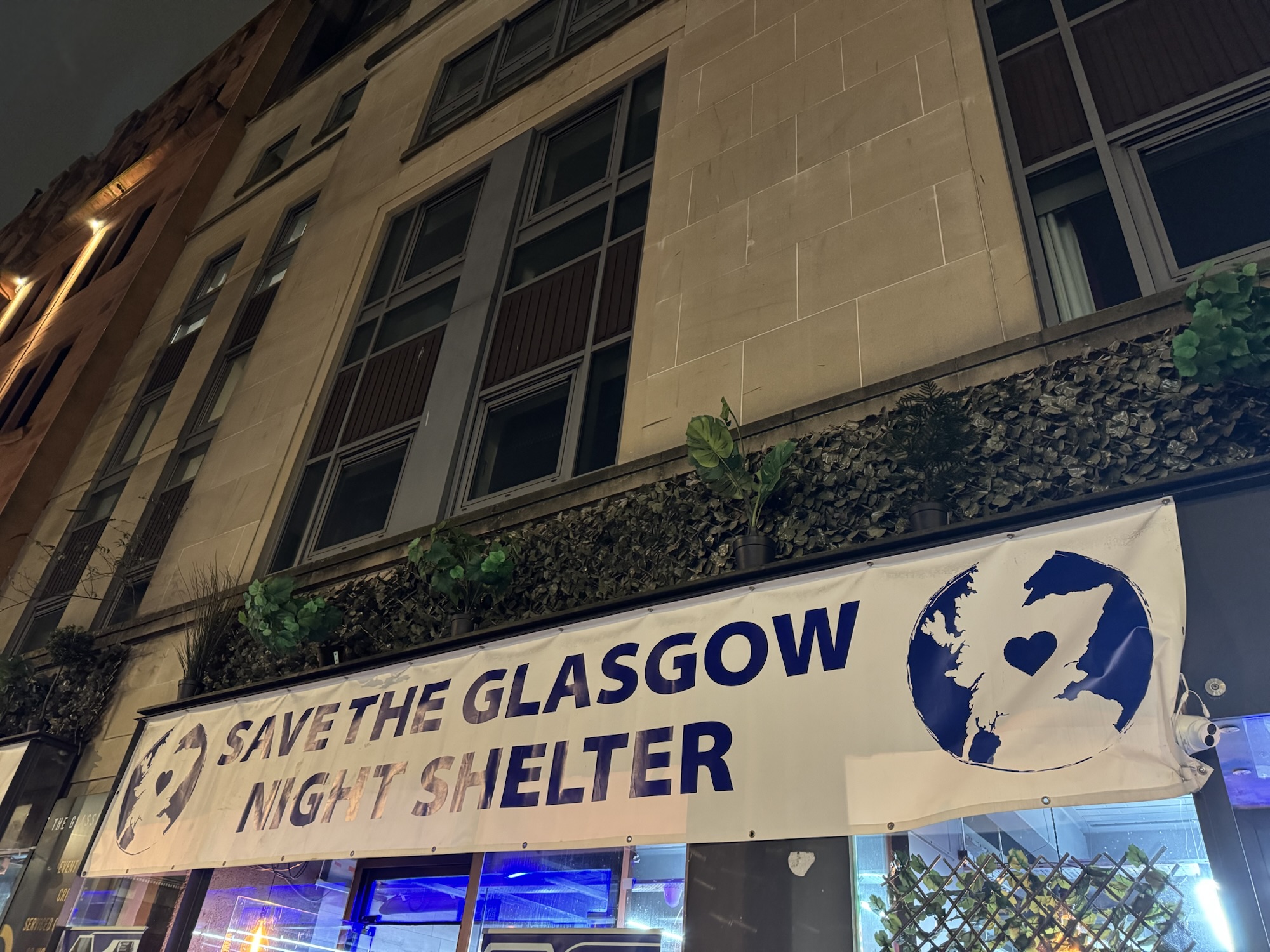
As experts look to move away from homeless shelters, are critics overlooking the relief these shelters provide?
As the Covid Pandemic lockdown began in earnest, the world came to a standstill, and for many of society’s overlooked, it could have spelled disaster. But in Scotland a different path was taken, as a network of academic and charity organisations rapidly pulled together, quickly providing accommodation through the ‘Everyone Home’ scheme. The swift action supposedly ended homelessness as a major crisis in the country, though this only came to serve as a sticking plaster to an endemic national problem.
This rapid rehousing was largely down to the work of the Everyone Home Collective. Made up of 35 organisations, the collective was created in the spring of 2020 as an emergency response to the pandemic outbreak, seeking to rapidly rehouse people into hotels and other temporary accommodation. The collective’s work saw great success, as rough sleeping numbers plummeted drastically, offering a golden opportunity to end this form of homelessness for good. Though that vision was never made into reality, the group continues to focus on the issue of housing and ending homelessness.
Scotland’s only ‘Emergency Night Shelter’
Homeless Project Scotland (HPS) operates Glasgow’s only emergency night shelter, which provides essential services to 30-35 people each night from hot meals and showers, to clean clothes and a bed for the night. Since HPS re-opened the volunteer-led night shelter in November 2023, the charity has faced an uphill battle to keep its doors open. Located on Glassford Street in Glasgow’s upmarket Merchant City, the charity continues to face concerns over safety, the impact on local businesses and questions over its place in the struggle to end homelessness and rough sleeping.

In addition to the emergency night shelter, the charity also runs other interventions, such as through their street teams, national helpline or soup kitchens which they operate at Glassford Street and other locations such as Glasgow Central Station’s railway bridge.

As it was reported last month, the ‘owner and operator of the Scotsman Group’ wrote a letter of complaint to the Council, arguing that the night shelter would drive away high-spend customers from the area if the shelter received formal approval to operate 24 hours-a-day. The letter expressed concerns over the safety of their staff, as well as adverse impacts on surrounding businesses in the area, though HPS refutes this assertion, sating that the facility reduces anti-social behaviour and harm to unhoused individuals by supporting them away from rough sleeping.
In October 2025, the Planning Local Review Committee rejected the charity’s appeal, however, the committee encouraged the charity to reapply. At the time, Colin McInnes, who heads up Homeless Project Scotland, expressed he was “disappointed and disgusted” by the rejection, noting that SNP and Green Councillors had voted to reject “a vital facility that provides warmth, safety, and dignity to those with nowhere else to turn.”
McInnes went on to add that “this decision has left the homeless and vulnerable once again facing uncertainty and fear about their future. It is not enough that they have already endured sleepless nights worrying about where they will go now they must wait yet another year or more for the next planning application.”
The result of their latest application is currently pending.
When asked about the place of HPS’s night shelter in tackling homelessness and rough sleeping, Colin McInnes explained “The night shelter is very important in Scotland, and I think Homeless Project Scotland has demonstrated that the shelter is needed. We’ve had over 40,000 individuals come through our doors since December 2023,” he says.
“One of the big things with the shelter is that we are not just a bed. When people come in, our goal is to book them in, approach the council and ask for accommodation, then, hopefully, the council provides that accommodation. And if they don’t, then we provide an emergency bed that evening,” he explains, “but we are not a ‘come and live with us’ service, we’re a move on service.”
McInnes suggests that critics need to “review their thinking,” stating that “I would say categorically that our night shelter has had more positive outcomes for homeless people than any other service within Glasgow at this moment in time.”
“If the night shelter wasn’t available then people would be rough sleeping, and when you’re rough sleeping there is a chance of you dying.” he says, “so obviously you’ve got the big safety aspect to that.”
What does the research say?
Meanwhile, researchers from the Institute for Social Policy, Housing, Equalities Research (I-SPHERE) at Herriot-Watt University, warn that the progress Scotland made in eliminating the use of these shelters during the pandemic should not be lost.
They argue that shelters, such as HPS’s Glassford Street site, are only designed for short-term stays, lack guarantees on access, with staff enforcing rules which can result in warnings, sanctions or potentially even eviction. Although their research does not focus specifically on Homeless Project Scotland’s night shelter, they argue that lessons should be learned from the nearly four years Scotland took a shelter-free approach to homelessness.
One such way the researchers propose is through social housing, pointing out that Scotland has comparably lower rates of rough sleeping and homelessness compared to the rest of the UK, which they attribute to the country’s significant social housing sector. In Scotland, social housing comprises roughly 23% of housing stock, compared to England and Wales’ approximately 16%. They say that such housing, owned and let at below market rates by Local Authorities, not only offer a directly-controlled government-led approach to tackling homelessness, but can also offer more security to tenants than those in the private rental sector.
Glasgow and Council housing
Three years on from Glasgow declaring a housing emergency, the prospect of providing enough housing remains a significant challenge, with Your Party Councillors attempting to include council housing as part Glasgow’s latest budget, which was unsuccessful.
The Council abandoned city-owned housing after they transferred the ownership of 80,000 homes to GHA (Glasgow Housing Association) in 2003. Currently there are over 100,000 social homes in Glasgow, though these are operated by various housing associations, not the city council.
Speaking to Your Party Councillor Dan Hutchison, who expressed the need to reintroduce council housing prior to the budget last month, he explained the troubling situation facing Glasgow.
“There are only 4 councils in Scotland that don’t provide their own Council housing,” he says, “Glasgow’s facing a clear housing emergency, I think we’re facing a pretty difficult situation. While other local authorities elsewhere in Scotland might not have the same pressures as we do, they certainly don’t have nearly the same difficulty in accommodating people.”
Hutchison says that much of the problem comes from too many people being placed into temporary accommodation such as hotels or B&Bs for longer than the mandated 28 day turnaround period: ” In Glasgow that’s lasting months,” he explains, “there’s cases that people are reporting to us that it has been over a year that they are stuck in that accommodation.”
“Because we did the housing stock transfer in 2003, we don’t have any control over being able to provide that accommodation,” he says, “the other local authorities that do have council houses will just rely on their own stock, which means thy have a much faster turnover and they have much more control.”
Although Councillor Hutchison does not sit on the Planning committee, he said of Homeless Project Scotland: “They shouldn’t have to exist. We shouldn’t have to have that level of temporary accommodation,” stating, “I think what we are trying to do is make sure that situation never has to happen.”
Although the future of Glasgow’s night shelter remains uncertain, for the time being, it continues to provide for the essential needs for many of Glasgow’s unhoused and rough sleeping population.


