As the popularity of escaping on a pilgrimage spikes, Fiona explores why individuals choose to embark on such a mission, and how its meaning has changed over time.
“When I’ve done pilgrimage, it’s actually about all about the journey,” Dr Sandy Forsyth, a Senior Teaching Fellow at Edinburgh University and parish minister at Newington Trinity Church, discloses.
He continues, “It’s very nice to arrive in Santiago. It was very nice to arrive in Iona or St Andrews, but I wasn’t there because there may have been relics there. I was there because I completed the journey.” Sandy engages with pilgrimage both personally, and through organising journeys across Scotland for his congregation.
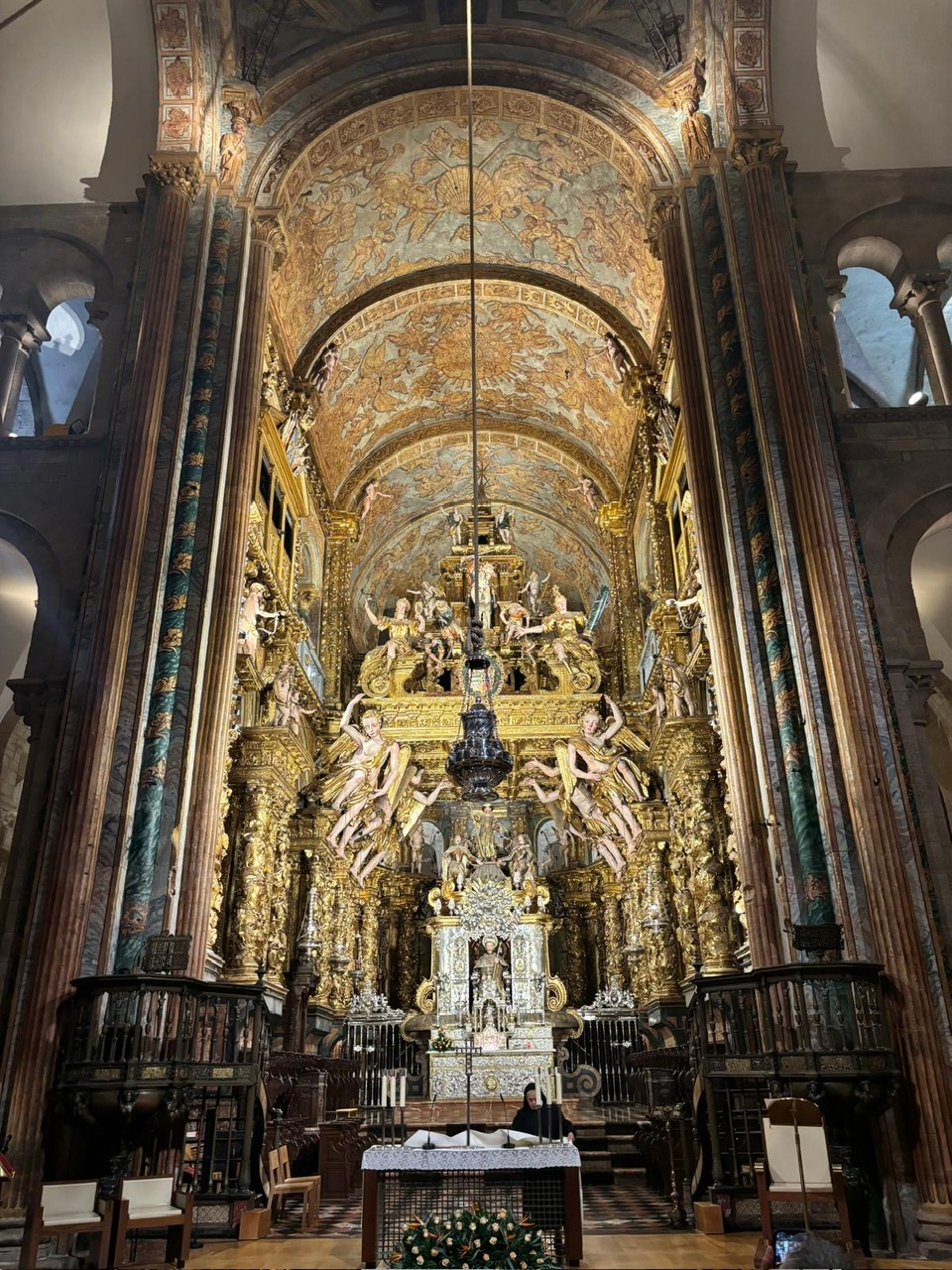
In recent years, the popularity of embarking on pilgrimage, a historically religious journey, has seen a huge rise. At the same time, the reasons for doing so have changed massively. The Camino de Santiago, or Way of St James, is one that has become particularly popular.
Data from The Pilgrim Office of Santiago de Compostela highlights that they welcomed 499,241 pilgrims in 2024, which is over 50,000 more visitors than the previous year.
Sandy considers the rise in visitors in relation to religious belief. He says, “The number who walk the Camino who are doing it for spiritual reasons is actually quite high, but there’s still maybe about a quarter or so that say it’s got nothing to do with that at all.”
Sandy refers to the unique offering of pilgrimage, describing how “it’s a way of engaging with faith and spirituality that is on [individual’s] terms and is non-invasive.” He puts this down to the focus on “senses,” “emotions” and “personal feelings,” rather than a stricter space comprised of rules and obligations.
Importantly, Sandy describes how pilgrimage is “a place of open conversation” in a post-modern world where fewer people are subscribing to “institutional mainline religion.”
Travels With a Stick is a book by Reverend Richard Frazer, a writer on pilgrimage and previously the minister at Greyfriars Kirk Church in Edinburgh. He retired at the end of 2023 after almost 21 years and currently leads groups on pilgrimages.

Pondering the question of why so many people who would not describe themselves as ‘religious’ take part in pilgrimage, Richard pinpoints curiosity. He says, “People still have a kind of spiritual hunger, and they’re still very curious about the story of faith and about what it means.”
Richard tells the story of a woman who he met when walking the Camino. She described to him a “crisis of faith and trust in the institutions of religion, but not amongst people,” saying that people are still searching for “spiritual realities that the world and consumer society will never give” them.
He puts this in the context of the period in which Protestant churches banned pilgrimage. Sandy Forsyth highlights how it has “only really been the last 10 years when the church has embraced it again.”
Richard refers to how pilgrimage provides an opportunity for people to re-connect to their natural surroundings, in light of the current climate crisis.
The author comments on how, “in the time when we’re facing the environmental challenges that we face where we’ve exploited the natural world, we’ve used it and we’ve sometimes used it very badly…the idea that you relearn your place within nature, not dominating it, but being part of it, is actually a really important lesson.”
He expresses how “the environmental movement could benefit a lot from more and more people on pilgrimage.”

A huge part of the attraction to pilgrimage is the impact on walkers who take part. Alongside his wife, Richard set up the Grassmarket Community Project in Edinburgh. As part of this, almost 20 years ago, one group journeyed together from Greyfriars Kirk to Lindisfarne Island.
The former minister tells a particular story of a man on this walk, he’d “been a heroin addict for about 20 years and was in recovery and was wanting to make some positive changes in his life.”
“Gradually, over several days of walking, he became much more fit, and he was able to share his story.” The man on the walk, John, ended up starting the walking group which is still running now.
Richard describes how pilgrimage can be “life-affirming, faith-affirming, and life-changing.”
Someone who has experienced just that from pilgrimage, is Penny Dears, from Hertfordshire, who has been on three journeys with her husband. Penny expresses, “It’s been the most life-affirming experience.”
She describes herself as “more spiritual rather than religious.” Penny refers to the relationships built with people that she met on the walks, people with whom “you already have common ground.” She details the “amazing community” on the Camino and the life-long friends she has built from taking part.

The connection built between people walking the pilgrimage is very clear. Sandy tells the story of a man that he and his friend, Peter Wood met when walking part of the Camino.
He describes all three of them walking into Santiago de Compostela. Sandy says, “We’re chatting along walking to this guy, who’s basically telling us what a great time he’s going to have” when he arrives in the town. He continues, “As soon as we got towards the cathedral, he started crying and weeping. Tears were pouring down his face.”
From there, the man “started talking about what had happened in his life and how this was kind of a way for cleansing himself and getting back on course again in life and it was deeply emotional.”
The healing properties of going on such a journey are visible in Sandy’s story. Richard raises how “walking therapy” has become part of counselling practice. He pinpoints that “counsellors and psychotherapists recognise that there’s great power” in walking.
The strength of pilgrimage remains clear, even though motivations for taking part have altered. Penny describes how one walk had her “hooked.” As more people get a chance to take part, and the meaning diversifies, it seems pilgrimage will continue to adapt and grow in a changing world.


